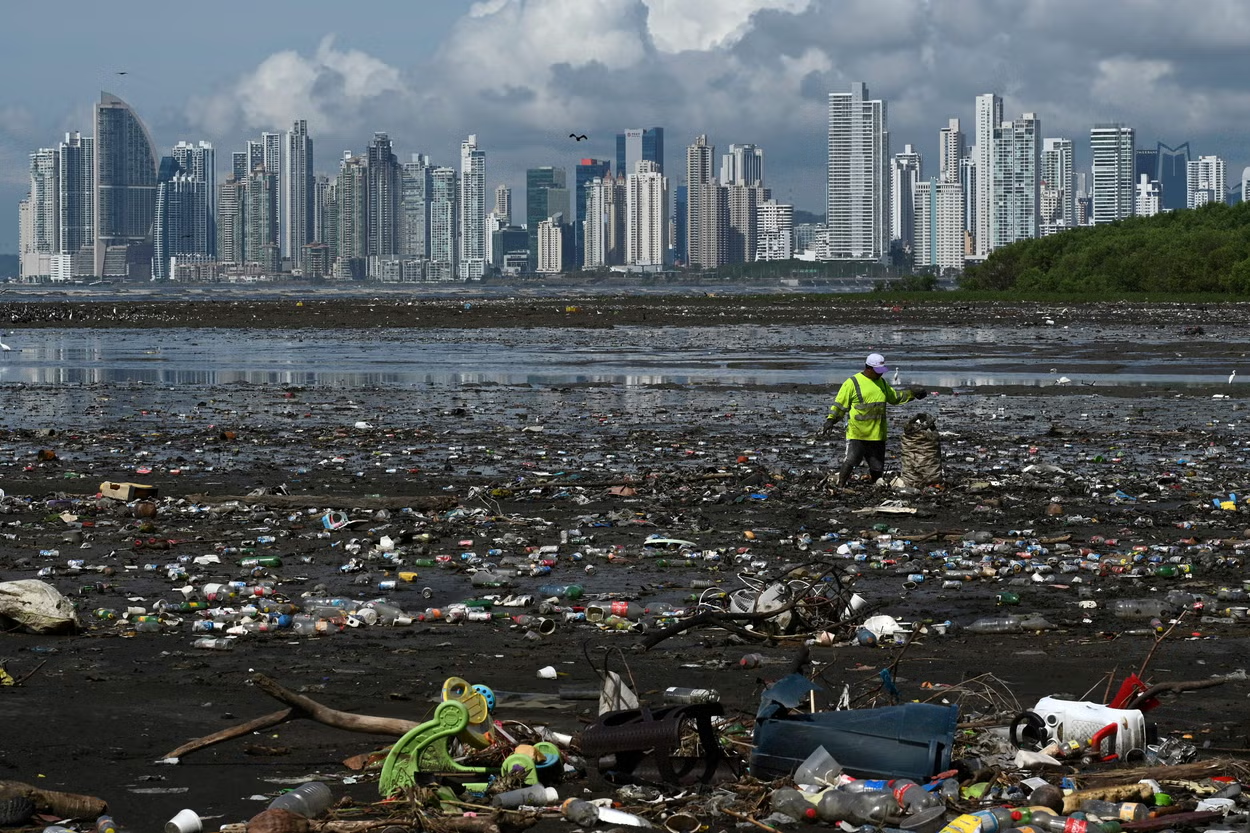
(AFP via Getty Images)
Panama is facing growing challenges in the area of waste management and circular economy. Low recycling rates, increasing waste volumes, and limited data availability make it difficult to plan effective measures and investments for the transition to a well-organized circular economy. The SmarCiPan project supports Panama in addressing these challenges through data-driven decision-making, innovative digital tools, and international cooperation.
Project Description
The project “SMART CIRCULAR PANAMA: AI-Supported EPR and Technology Modulation for a Future-Oriented Circular Economy in Panama” (SmarCiPan) supports Panama in its transition to a modern and sustainable circular economy. The project focuses on the development of SmAC (Smart AI Circular), an AI-supported decision-making tool for political and economic stakeholders.
As a digital twin of Panama’s waste and circular economy system, SmAC enables the mapping and analysis of material flows—despite data gaps—as well as the simulation of various policy, regulatory, and economic measures. For example, the impacts of extended producer responsibility (EPR) systems, infrastructure investments, or changes in consumer behavior can be assessed and compared with one another.
In addition to strengthening strategic planning and policy development, the project will identify technology and investment opportunities through a structured technology-matching process. This will connect local needs with suitable environmental technologies and solutions, particularly from German providers, while supporting the development of pilot projects and future public-private partnerships.
Title:
SMART CIRCULAR PANAMA (SmarCiPan)
Region:
Panama
Term:
24 Months (15.07.2026 – 14.07.2028)
Consortium:
German RETech Partnership e.V., Rodiek & Co. GmbH, cyclos GmbH, OpenEyz
Background of the Project
Panama faces significant challenges in the area of waste management and circular economy. Waste volumes in Panama City are expected to increase substantially over the coming decades, while recycling rates remain low and existing disposal infrastructure is under increasing pressure. The Cerro Patacón landfill, which receives most of the capital’s waste, is approaching its limits while repeatedly causing environmental and health risks. The need for more sustainable waste management solutions is obvious.
At the same time, insufficient data availability, fragmented monitoring systems, and limited infrastructure make long-term planning and investment decisions difficult. Although Panama has established important regulatory frameworks for a circular economy, the implementation of effective measures is often constrained by a lack of reliable information, practical decision-support tools, and clearly defined investment pathways.
Objectives of the Project
SmarCiPan aims to strengthen the foundations for a modern and data-driven circular economy in Panama by:
- Developing an AI-supported digital twin of Panama’s waste and circular economy system.
- Improving evidence-based decision-making for public institutions and private stakeholders.
- Evaluating the impacts of different policy measures, including EPR schemes, through scenario analysis.
- Identifying priority actions to reduce plastic waste and improve resource efficiency.
- Supporting investment planning and infrastructure development through data-driven assessments.
- Connecting local needs with innovative environmental technologies and expertise “Made in Germany”.
- Developing pilot concepts and implementation roadmaps that can be scaled through future investments and partnerships.
Activities and Measures of the Project
To achieve these objectives, SmarCiPan will implement several interconnected activities:
Analysis and Data Collection
A comprehensive assessment of Panama’s current waste management and circular economy system will be conducted, including the analysis of material flows, infrastructure capacities, regulatory conditions, and stakeholder needs.
Development of an AI-powered decision-making system (SmAC)
Based on the collected data, the project will develop the AI-based SmAC platform, enabling to model and compare different policy, investment, and operational scenarios, thereby supporting the planning of future measures. A digital twin forms the foundation of this approach.
Scenario Analyses and Evaluation of Policy Instruments
The project will evaluate the potential impacts of various circular economy measures, particularly EPR systems for plastic waste, on recycling rates, costs, waste flows, and environmental outcomes.
Technology Matching and Investment Preparation
The identified needs are matched with suitable technological solutions in a particular technology-matching tool, especially those which are “Made in Germany.” The results are incorporated into the development of related pilot projects and investment concepts.
Capacity Building and Knowledge Transfer
Workshops, stakeholder dialogues, and dissemination events will strengthen local capacities and promote the exchange of knowledge between Panamanian and international partners.
Supported by
Funded by: